

If your dentist has mentioned a root canal, you may feel a flash of dread. That reaction is understandable, and it is also based on an outdated reputation. In a modern specialty practice, a root canal is a comfortable, predictable way to relieve pain and keep a tooth you would otherwise lose.
What a root canal actually treats
Inside every tooth is a soft core called the pulp, which contains nerves and blood vessels. When decay, a deep filling, a crack, or an injury lets bacteria reach the pulp, it becomes inflamed or infected. The result is often a throbbing ache, lingering sensitivity to hot and cold, pain when chewing, or swelling.
A root canal treats the problem at its source by removing the damaged pulp, cleaning and disinfecting the narrow canals inside the root, and sealing the space so bacteria cannot return.
What happens during treatment
The visit is more straightforward than most people expect:
- You get fully numb first. We apply a topical anesthetic before any injection, and we take the time to make sure the tooth is completely numb before starting.
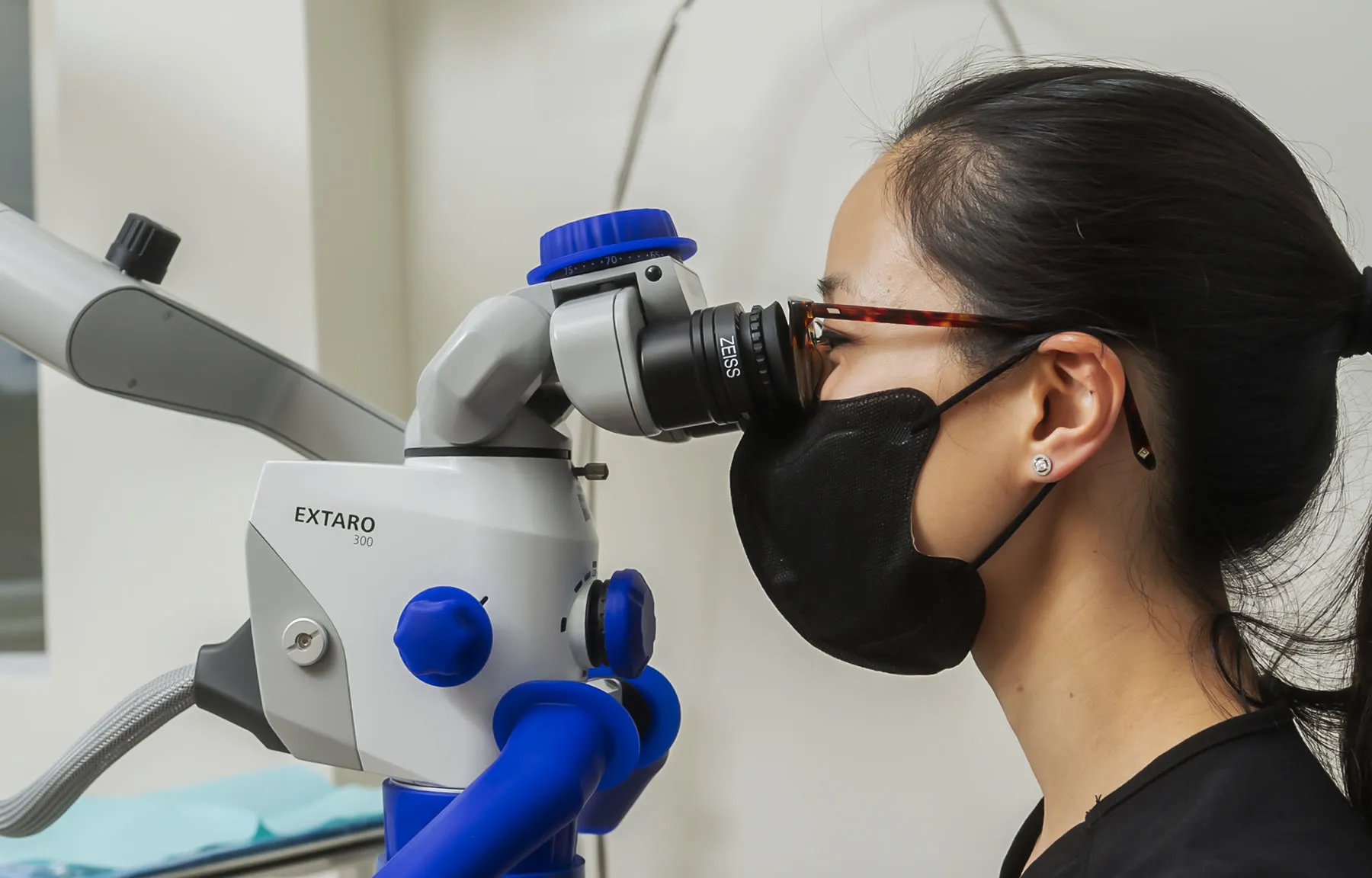
- We work under a microscope. An operating microscope reveals the fine internal anatomy of the tooth, so treatment is precise and thorough.
- We clean, shape, and seal. The pulp is removed, the canal system is disinfected and shaped, and the space is sealed with a biocompatible material.
- The tooth is closed. A temporary or permanent filling protects the tooth until your general dentist places a final crown.
Most single-visit root canals take about 60 to 90 minutes. Many patients tell us it felt similar to having a filling placed.
Does it hurt?
The procedure is designed to relieve pain, not cause it. Once the tooth is numb, you should feel only pressure and vibration. If you feel anxious, ask about nitrous oxide or oral conscious sedation to help you relax.
After your root canal
Mild tenderness for a few days is normal and usually managed with over-the-counter pain relievers. Chew on the other side until your dentist places the final restoration. If pain or swelling increases rather than eases, call us, that is worth a quick check.
Why saving the tooth matters
Keeping your natural tooth preserves your bite, your jawbone, and your smile, and it is almost always faster and less costly over time than removing the tooth and replacing it with an implant or bridge. When a tooth can be saved, that is almost always the better path.
If you have a toothache or have been told you might need a root canal, we are happy to take a look and give you an honest assessment. Request an appointment or call our team any time we are open.
This article is for general education and is not a substitute for an in-person examination.