

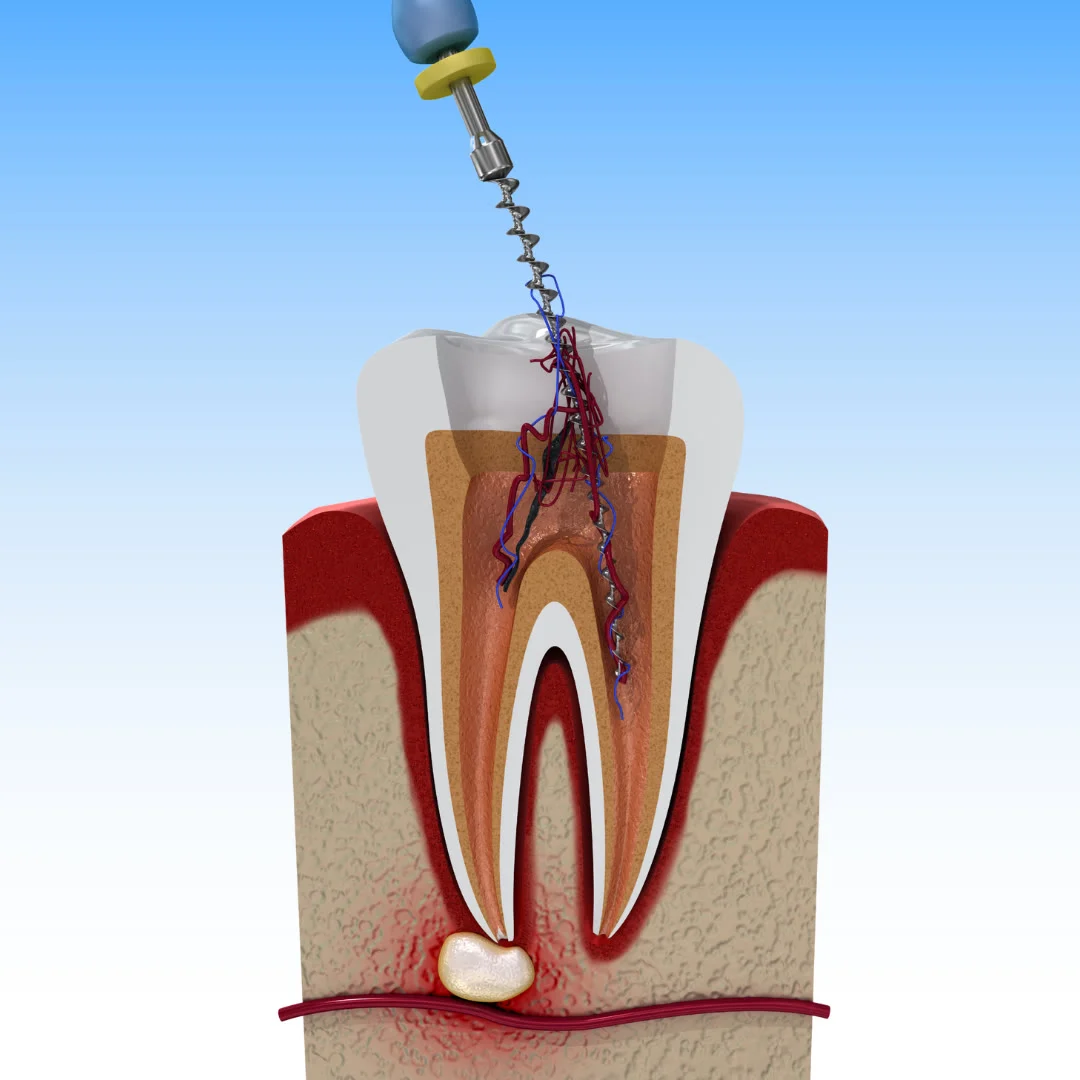
A root canal has an outdated reputation. In a modern specialty practice it is a comfortable, predictable way to relieve pain and keep a tooth you would otherwise lose. Inside every tooth is a soft core called the pulp. When decay, a deep filling, a crack, or trauma lets bacteria reach the pulp, it becomes inflamed or infected, and the result is often throbbing pain, lingering sensitivity to hot and cold, or swelling.
Root canal therapy treats the problem at its source. After you are fully numb, Dr. Leong creates a small opening in the tooth and, working under an operating microscope, removes the damaged pulp, disinfects the narrow canal system, and shapes it so it can be sealed. The tooth is then filled with a biocompatible material and closed with a temporary or permanent restoration. In most cases you will return to your general dentist for a final crown that protects the tooth for the long term.
Because endodontists focus on this treatment every day and use magnification and cone beam 3D imaging when appropriate, we can find and treat canals a general office may not see, which is one of the biggest factors in a lasting result. Saving the natural tooth keeps your bite, your jawbone, and your smile intact, and it is almost always faster and less costly over time than removing the tooth and replacing it with an implant or bridge.
Most single-visit root canals are completed in about 60 to 90 minutes, and many patients are surprised to find the appointment feels similar to having a filling. If anxiety is a concern, ask us about nitrous oxide or oral conscious sedation to help you relax.
This page is for general education and is not a substitute for an in-person examination. An evaluation confirms whether root canal therapy is right for your situation.
Benefits
- Relieves the pain caused by inflamed or infected pulp
- Preserves your natural tooth, bite, and jawbone
- Microscope-guided precision finds and treats hidden canals
- Usually completed in a single visit for most teeth
- A predictable, well-studied alternative to extraction
What happens during treatment
-
Diagnosis & imaging
We confirm the source of pain with focused testing and digital or 3D imaging, then explain the findings on screen.
-
Complete numbing
We take the time to fully anesthetize the tooth, using topical anesthetic first so injections are barely noticeable.
-
Cleaning & shaping
Under the microscope, the damaged pulp is removed and the canal system is disinfected and shaped.
-
Sealing
The canals are sealed with a biocompatible material and the tooth is closed with a secure temporary or permanent filling.
-
Restore with your dentist
You return to your general dentist for a final crown or restoration so the tooth is protected for years to come.
What to expect at your visit
From the moment you arrive, our goal is a calm, unhurried visit. We review your history, answer questions, and make sure you are numb before we begin. During treatment we tell you what you will feel or hear next, so nothing is a surprise. Afterward you will receive clear written aftercare and a direct line to reach us with any concerns.
Is this right for you?
You may be a candidate for root canal therapy if you have a persistent toothache, prolonged sensitivity to hot or cold, pain when chewing, a pimple-like bump on the gum, or your dentist has found deep decay or infection near the nerve. A focused exam and imaging confirm whether the pulp is involved.
Why patients choose Ocean Endodontics
Endodontics is not a sideline for us, it is all we do. Performing root canal therapy under magnification every day, with 3D imaging when it helps, gives Dr. Leong the ability to treat complex anatomy thoroughly the first time. That focus is why general dentists across the west side of San Francisco refer their patients to Ocean Endodontics.
Recovery & aftercare
Mild tenderness for a few days is normal and usually managed with over-the-counter pain relievers. Chew on the other side until your dentist places the final restoration, and call us if swelling or pain increases rather than improves.
Cost & insurance
Most dental insurance plans provide benefits toward root canal therapy. We verify your coverage in advance and review the estimate with you before treatment begins, so you can make an informed decision without surprises.
For details on coverage and payment options, see insurance & financing, and if this is your first visit, our new patient guide walks through exactly what to expect.
Related reading: What Is a Root Canal, Really? in our Education Center.
We provide root canal therapy to patients across San Francisco’s west side, including Ingleside, Parkmerced, and St. Francis Wood. See all the areas we serve.