

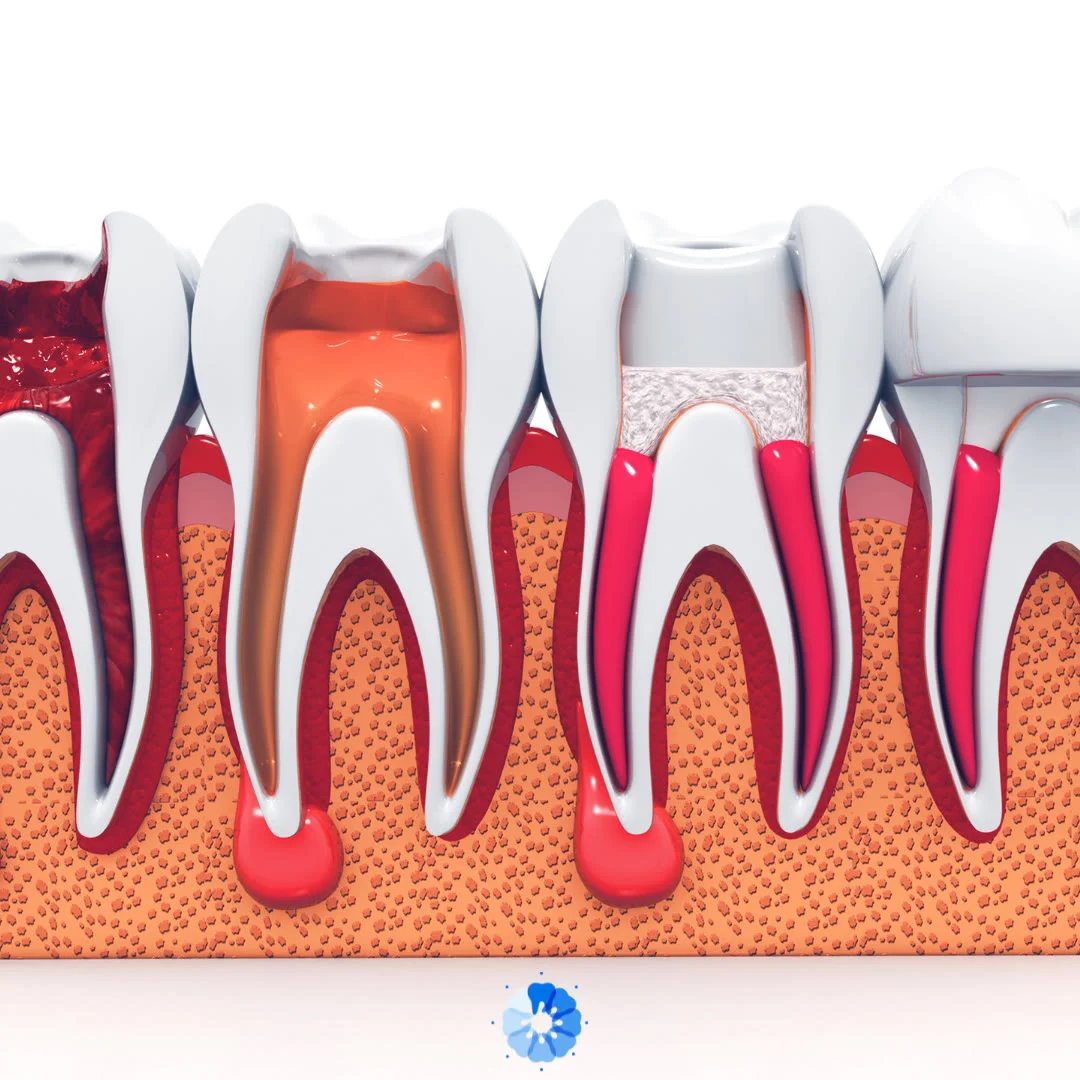
Sometimes a tooth that has already had a root canal continues to show signs of infection at the very tip of the root, in the bone. When retreatment through the crown is not the best option, an apicoectomy, also called endodontic microsurgery, treats the problem directly at its source and can save a tooth that might otherwise need to be removed.
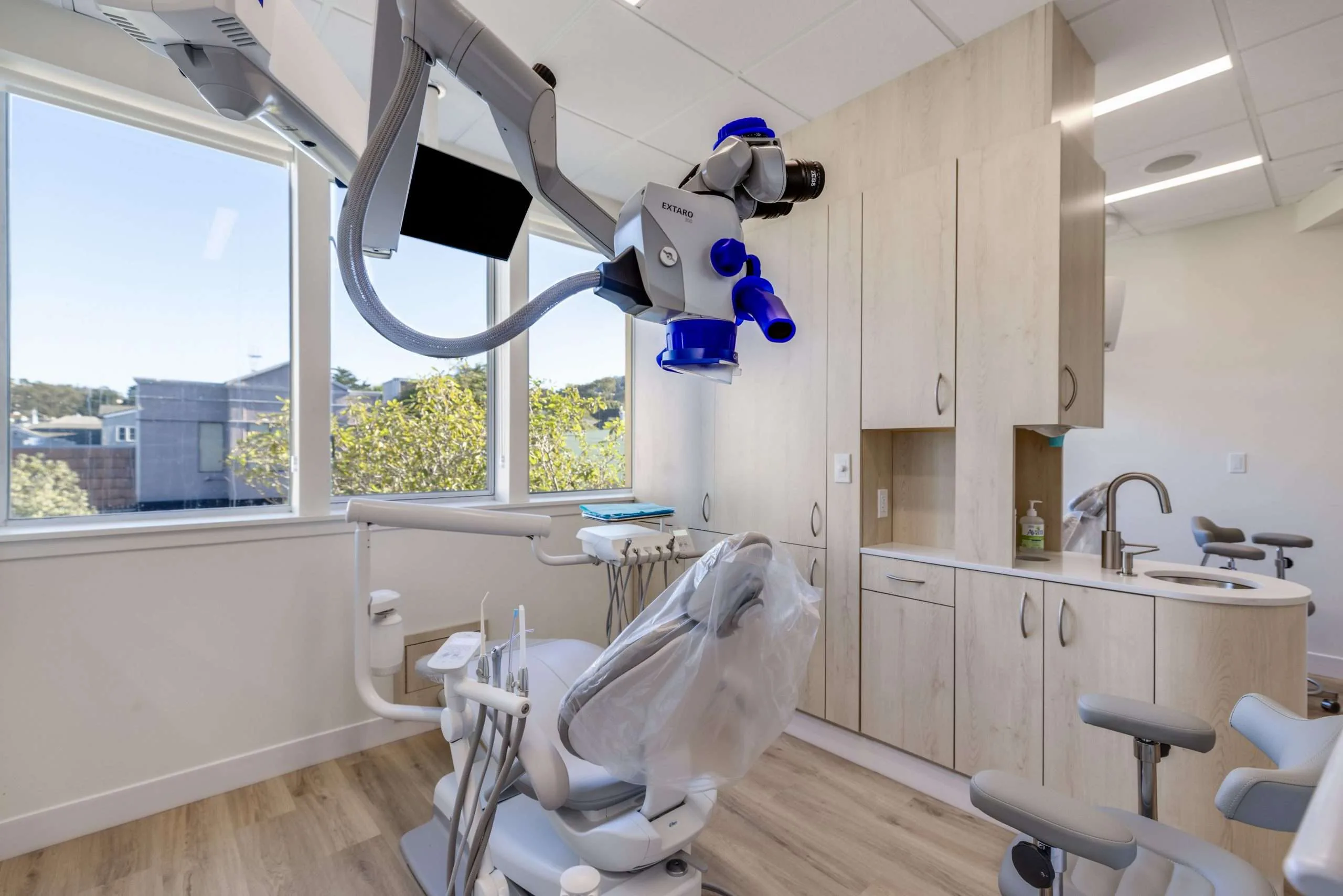
The procedure is more delicate than it sounds. After you are fully numb, Dr. Leong makes a small opening in the gum near the tooth to reach the root tip. Working under an operating microscope, she removes the inflamed tissue and the very end of the root, then places a tiny, biocompatible seal in the root end to prevent bacteria from returning. The gum is closed with fine sutures, and the area heals over the following weeks.
Microsurgery is exactly where specialty training and high magnification matter most. The structures involved are millimeters in size, and precision determines the outcome. Cone beam 3D imaging is typically used beforehand to map the root anatomy and nearby structures so the procedure is planned to the smallest detail.
An apicoectomy is a same-day, outpatient procedure, and most patients are comfortable returning to normal activities the next day. For a tooth with a solid crown and restoration already in place, microsurgery can be the most conservative way to resolve a stubborn infection without disturbing the existing restorative work. As always, we will only recommend surgery when it offers your tooth the best predictable outcome.
This page is for general education and is not a substitute for an in-person examination. An evaluation confirms whether apicoectomy (endodontic microsurgery) is right for your situation.
Benefits
- Resolves infection at the root tip that persists after a root canal
- Preserves an existing crown and restorative work
- Performed under an operating microscope for precision
- Same-day, outpatient procedure with a straightforward recovery
- A tooth-saving alternative to extraction
What happens during treatment
-
3D planning
Cone beam imaging maps the root tip and nearby anatomy so the procedure is planned precisely.
-
Gentle access
After thorough numbing, a small opening in the gum exposes the root tip.
-
Microsurgery
Under the microscope, the inflamed tissue and root end are removed and a small seal is placed.
-
Close & heal
Fine sutures close the site, and the bone heals over the following weeks.
What to expect at your visit
The visit is calm and carefully explained from start to finish. Local anesthesia keeps you comfortable, and the procedure itself is usually shorter than patients expect. You will leave with detailed aftercare and a direct way to reach us.
Is this right for you?
An apicoectomy may be recommended when infection or inflammation persists at the root tip after a root canal, when retreatment through the crown is not ideal, or when an existing crown is best left undisturbed. Imaging confirms whether microsurgery is the right approach.
Why patients choose Ocean Endodontics
Endodontic microsurgery is a defining skill of the specialty. Dr. Leong performs these procedures under the microscope with the meticulous, checked-and-rechecked approach our patients describe. Precision at this scale is what protects the tooth and the tissues around it.
Recovery & aftercare
Some swelling and mild discomfort for a few days is normal. Use cold compresses as directed, eat soft foods, keep the area clean, and avoid vigorous activity for a day or two. Sutures are typically removed or dissolve within about a week.
Cost & insurance
Coverage for endodontic surgery varies by plan. We verify your benefits, provide a clear estimate, and make sure you understand the recovery before scheduling.
For details on coverage and payment options, see insurance & financing, and if this is your first visit, our new patient guide walks through exactly what to expect.
We provide apicoectomy (endodontic microsurgery) to patients across San Francisco’s west side, including Parkmerced, St. Francis Wood, and Daly City. See all the areas we serve.